A canteen that balances itself

Replace the cash box with a till that knows every student, enforces every parent’s limit, and reconciles at the end of the day.

Everything the canteen and the office need

And nothing anybody has to be trained on twice.

A till on any device
The canteen attendant signs in on a phone, a tablet, or the desktop console. The only extra hardware is the fingerprint reader on the counter.
A priced item list
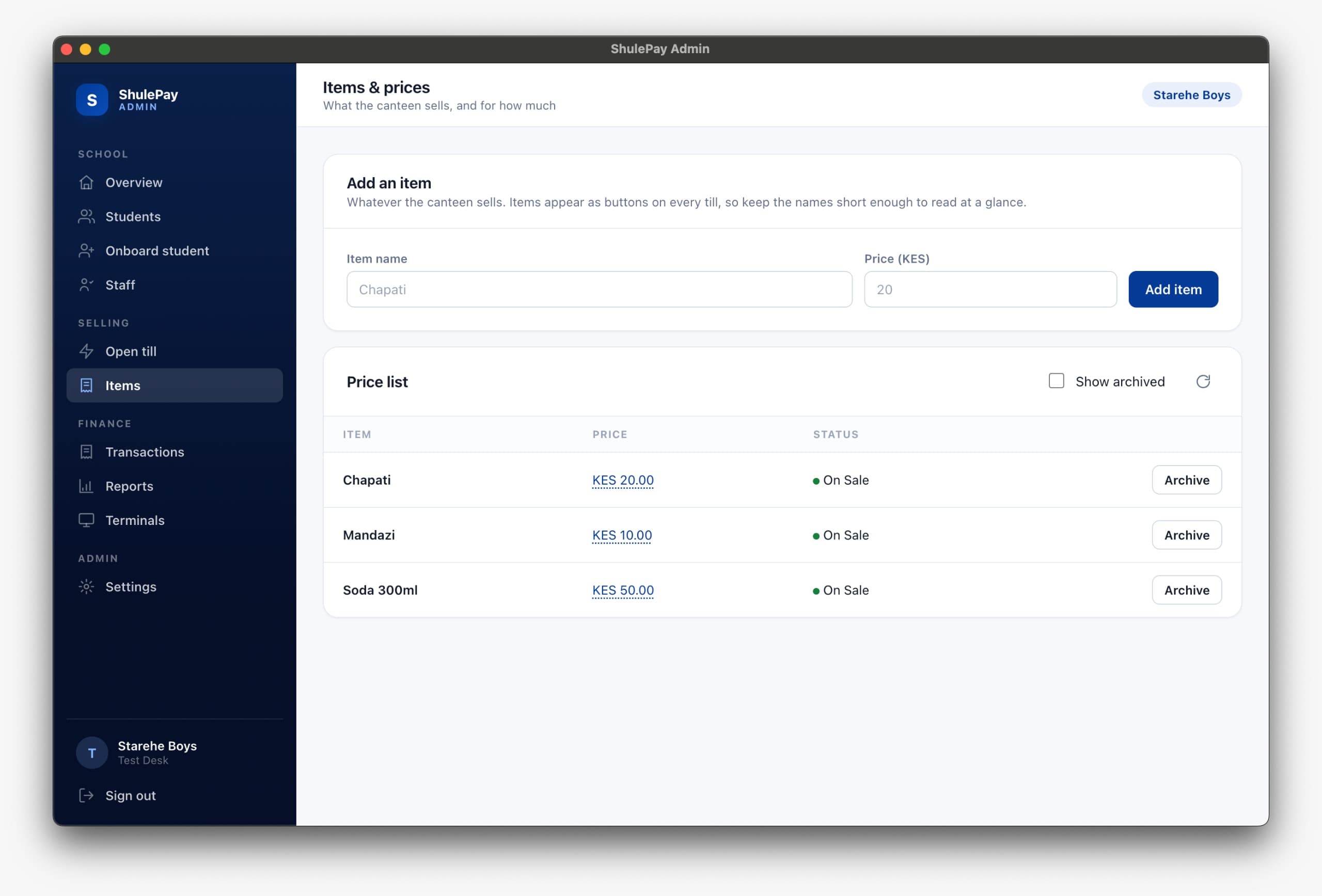
Add what the canteen sells and what it costs. Items appear as buttons on every till, and every sale is itemised. You know you sold forty chapatis, not just that you took eight hundred shillings.
Look a student up
Find a student by fingerprint or by admission number, and see the balance and what it will be after the sale before you charge anything.
One key per till
Every terminal authenticates with its own key. If a device walks off, disable that one and every other till keeps trading.
Staff and permissions
Colleagues sign in with their own phone and password at the permission level you choose, so every sale is attributed and nobody shares a login.
Books that close
Transactions, reports, and a daily integrity check that compares what M-Pesa says against what the ledger says, then tells you the moment the two stop agreeing.

One sale, start to finish

Four screens from the real console. This is the whole interaction a canteen attendant has to learn.
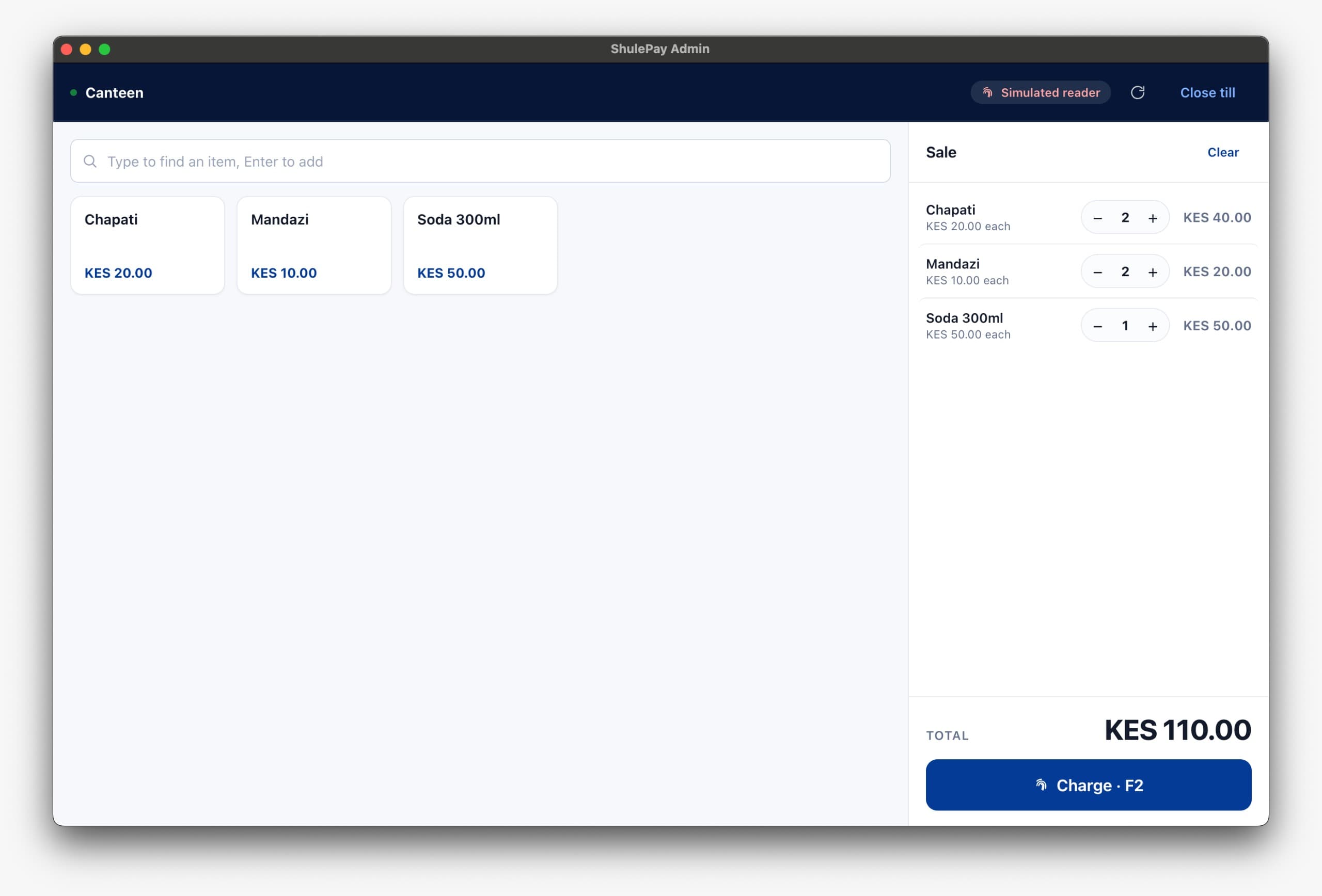
The canteen till: item buttons for Chapati, Mandazi, and Soda, with a running sale totalling KES 110.
Ring it up. Tap the items or type to search. The sale builds on the right with a running total.
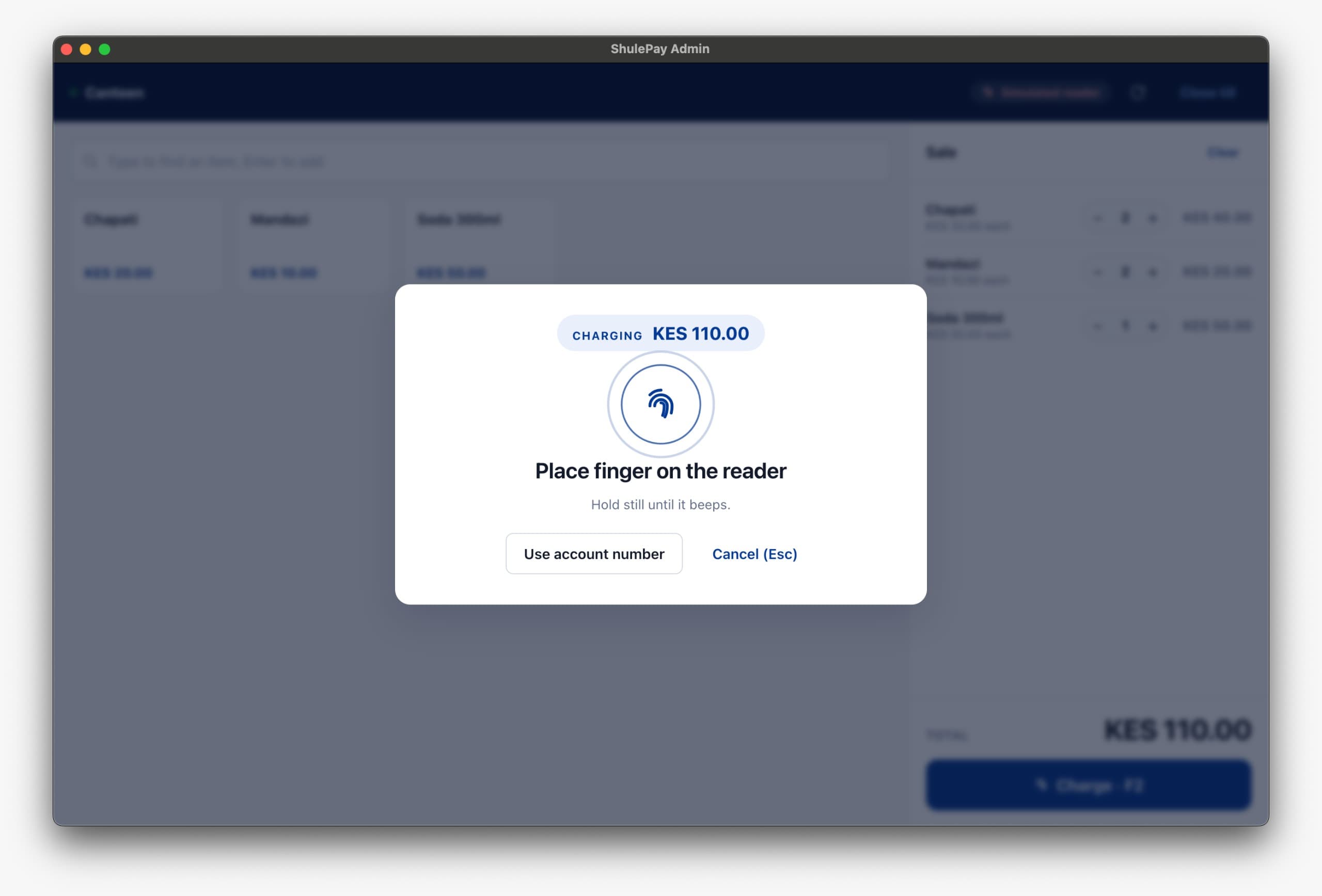
A dialog reading Place finger on the reader, showing the amount being charged and an option to use an account number instead.
Identify the student. A finger on the reader. If a print will not read, staff fall back to the account number without leaving the sale.
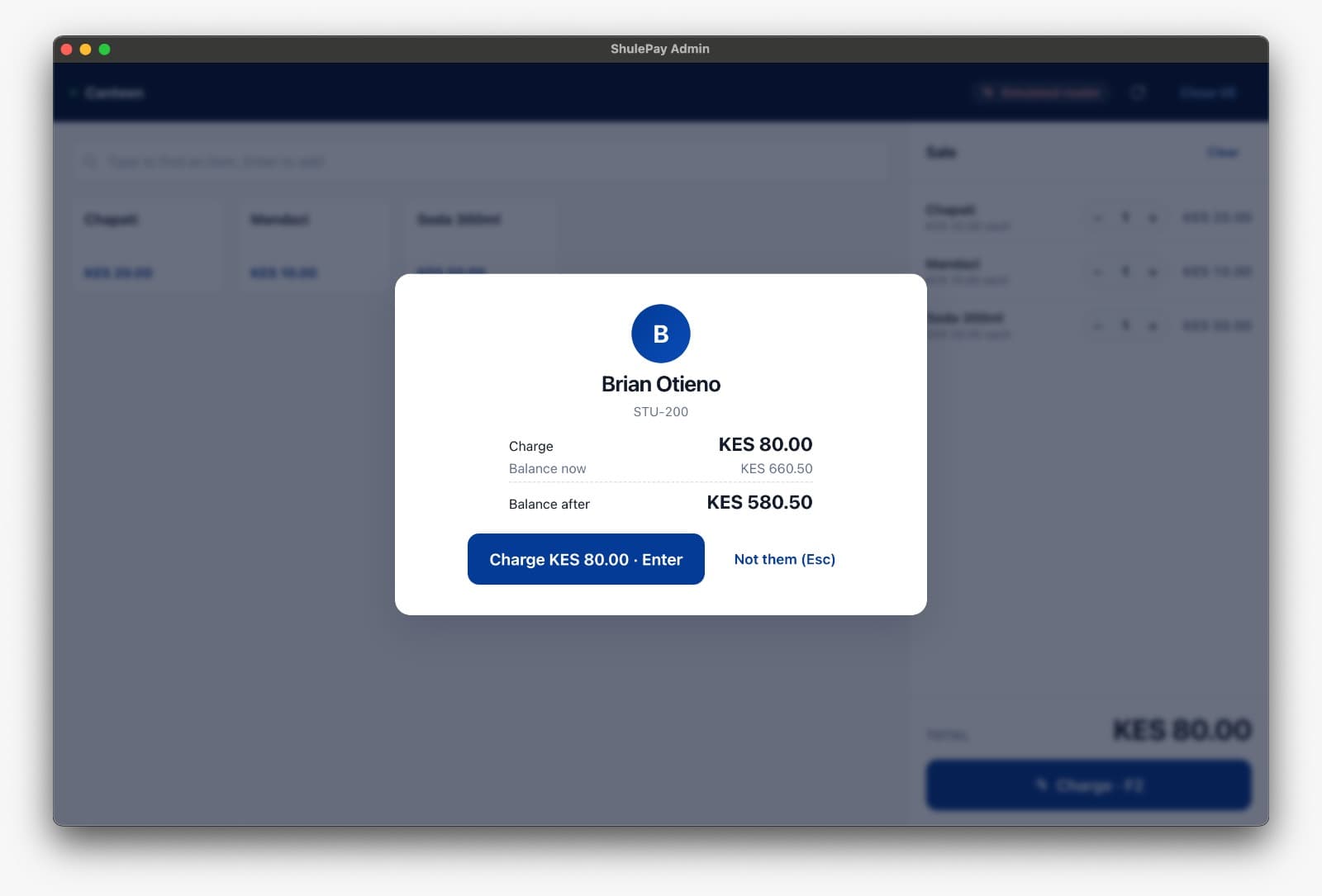
A confirmation showing the student's name, the charge of KES 80, the balance now and the balance after.
Confirm before you charge. The name, the amount, and what the balance will be afterwards, so a wrong scan is caught before the money moves.
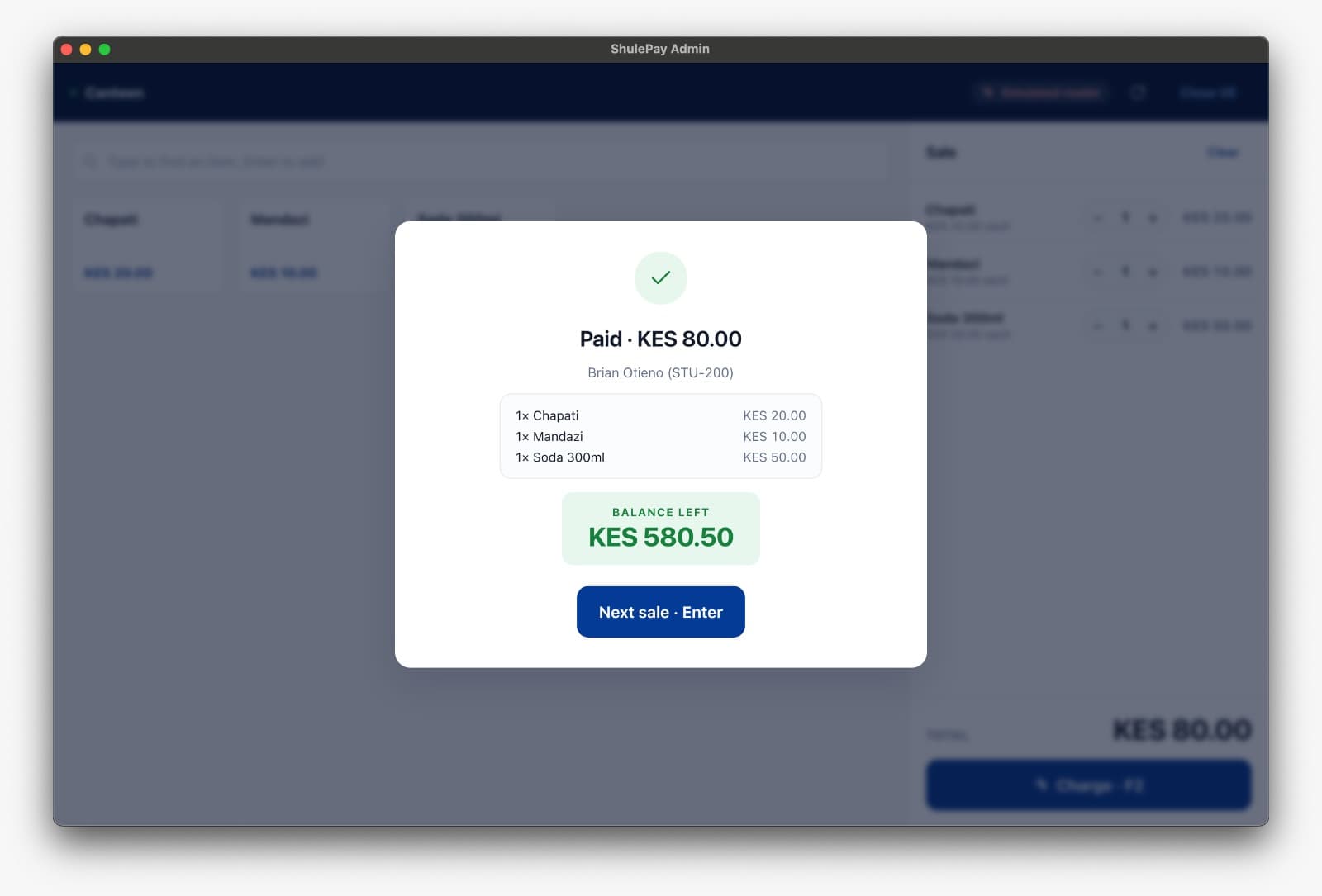
A receipt reading Paid KES 80.00, listing the items bought and the balance left.
Paid, itemised, done. The receipt lists what was bought and what is left, then the till is ready for the next sale.

And the office sees all of it

Every till in the school reports into one console.
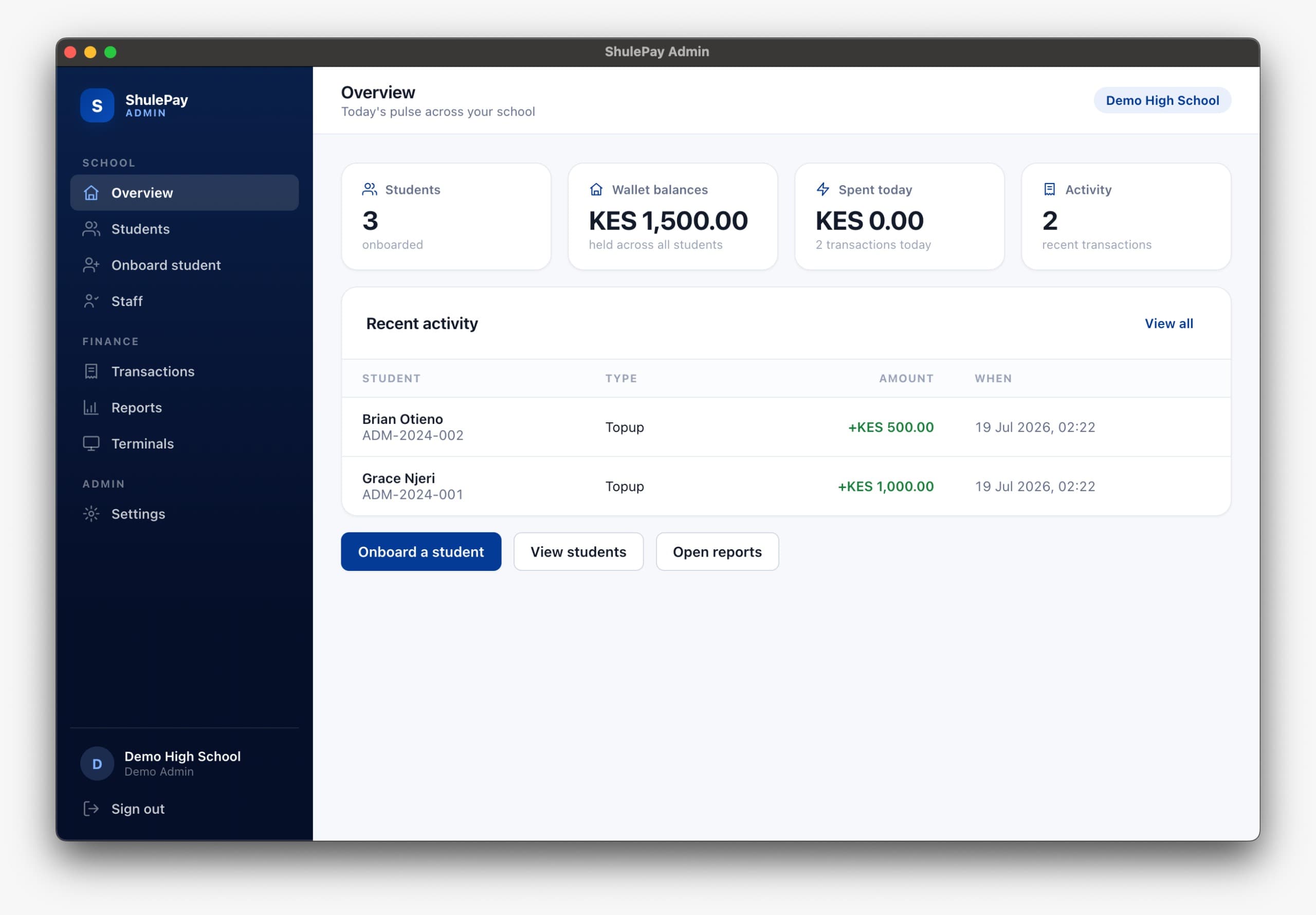
The console overview: students onboarded, wallet balances held, spent today, and a recent activity table.
Today at a glance. Students onboarded, balances held across the school, what has been spent today, and the latest activity.
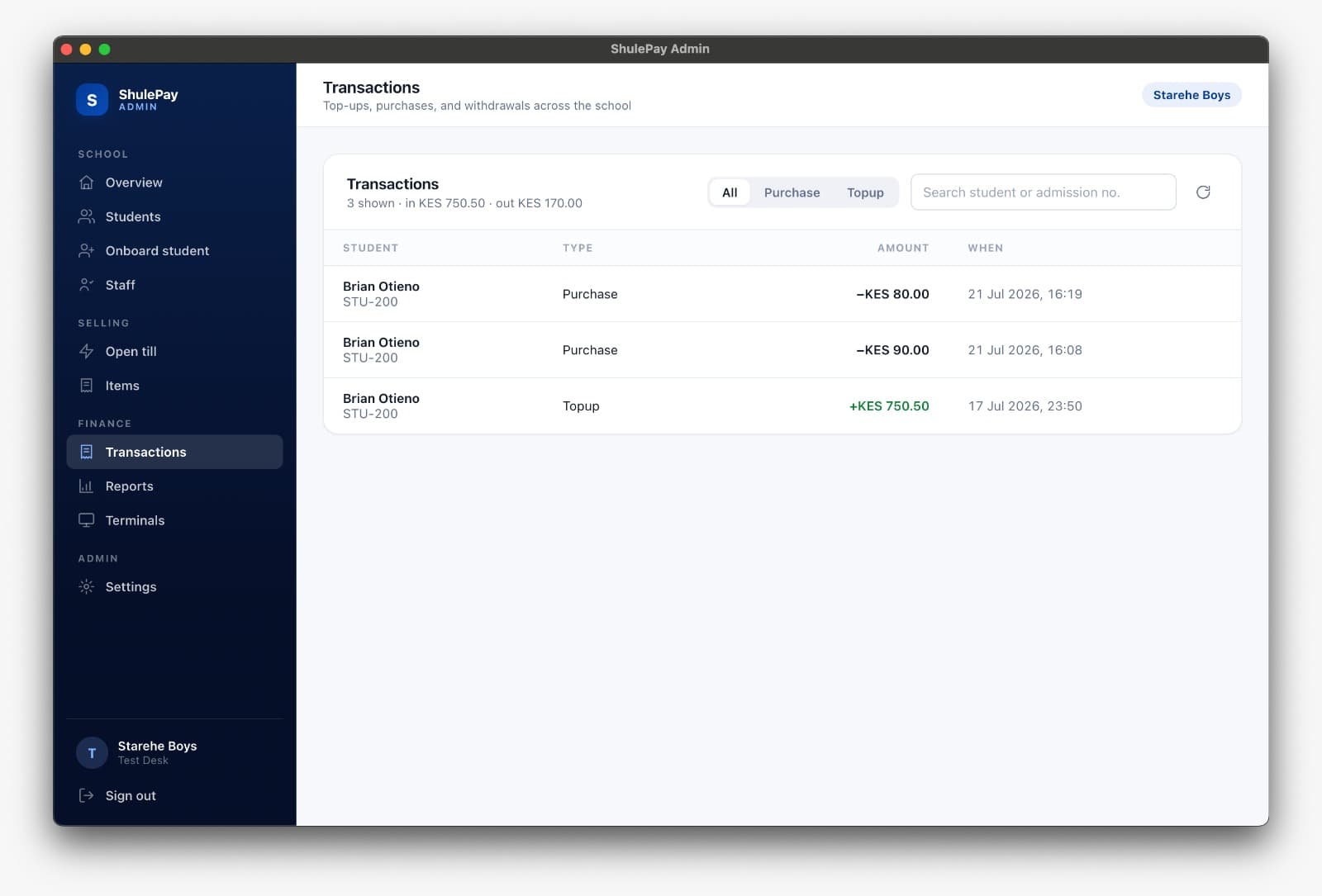
A transactions table filtered by type, showing purchases and top-ups with amounts and timestamps.
Every movement, searchable. Top-ups, purchases, and withdrawals across the school, filterable by type and searchable by admission number.
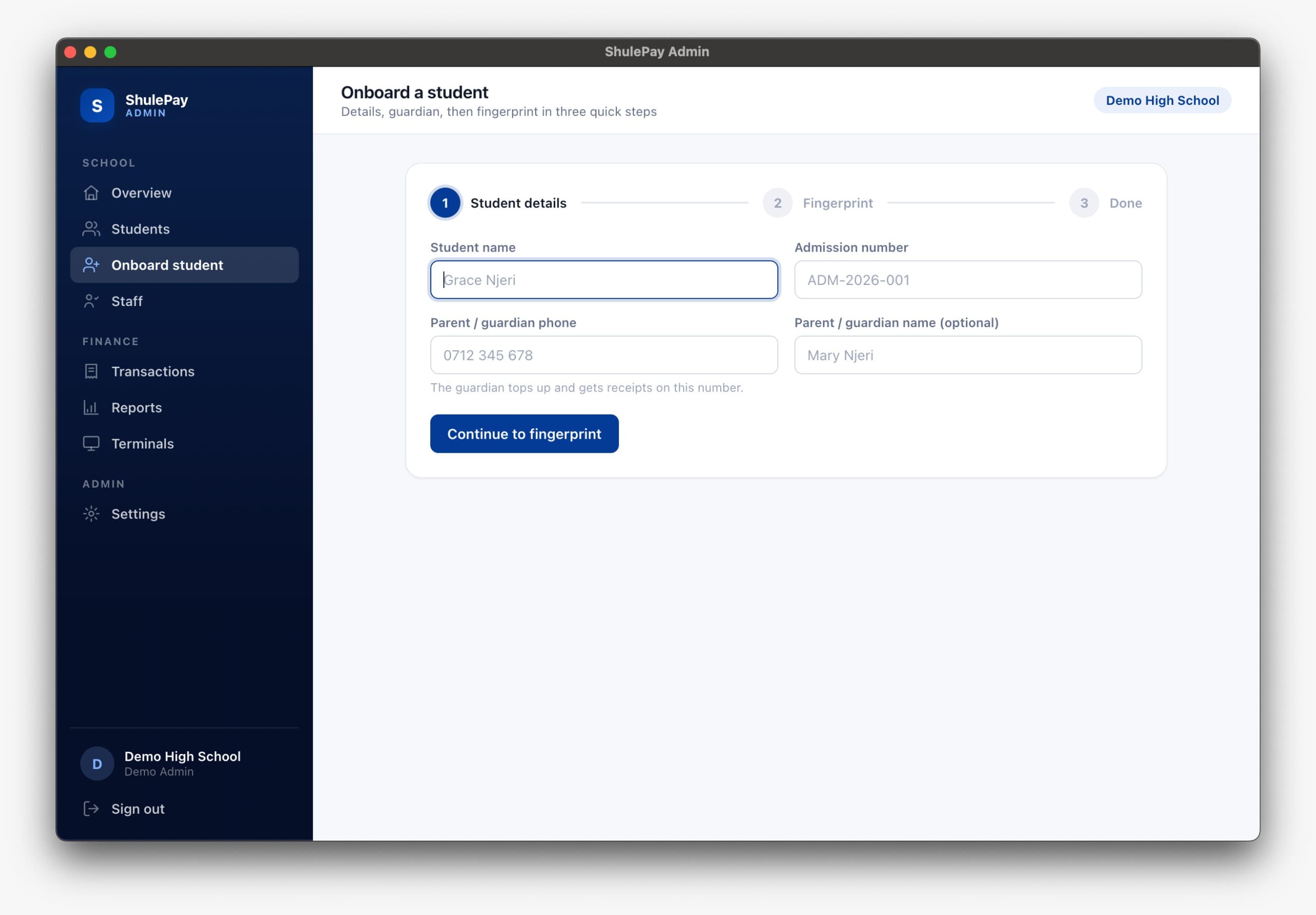
The onboard-a-student form: student name, admission number, guardian phone and name, as step one of three.
Onboarding takes three steps. Student details, then the fingerprint, then done. The guardian’s number is the one that tops up and gets the receipts.
The items and prices screen, listing Chapati, Mandazi, and Soda with prices and an on-sale status.
You set the prices. Add or archive items as the canteen changes. Keep the names short, because they become buttons on every till.

Try it with one canteen, one term

Start deliberately small: one canteen, one term, and us close at hand throughout. If it does not make the office’s life easier, it has not worked.

We usually reply within two working days.